These are books I return to, recommend to colleagues, or simply wish more people
in business had read. Some are explicitly about management or strategy; others
are about power, institutions, persuasion, labor, or the peculiar things
organizations persuade otherwise sensible people to do.
Affiliate disclosure:
Some links on this page are affiliate links, which means I may earn a commission
if you make a qualifying purchase, at no additional cost to you.
As an Amazon Associate I earn from qualifying purchases.
Start Here
Patrick's Shortlist
If you are looking for a place to begin, these are a few of the books
I recommend most strongly.
Patrick's Shortlist
The New Economics for Industry, Government, Education
W. Edwards Deming
Deming is a useful antidote to the managerial instinct to blame individuals
for problems created by systems. The book changed how I think about
measurement, variation, incentives, and the considerable damage organizations
can cause while earnestly trying to improve performance.
Ehrenreich punctures the comfortable fiction that low-wage work is simple work.
The book is funny, angry, observant, and particularly good at showing how
organizations transfer costs and uncertainty downward to the people least able
to absorb them.
One of the books I would most like people to read before concluding that
organizational dysfunction is caused by a few unusually bad managers. Jackall
shows how incentives, hierarchy, ambiguity, and self-preservation can make
perfectly ordinary people behave in ways they might never choose independently.
Sutherland is especially good at exposing the limits of excessively rational
approaches to marketing and consumer behavior. I recommend it to anyone who
has ever watched an organization optimize away the very thing that made an
idea interesting.
One of my favorite accounts of what happens when strategy, ego, governance,
celebrity, and corporate politics become inseparable. It is nominally a book
about Disney, but much of it will feel unnervingly familiar to anyone who has
spent enough time inside a large organization.
Essential reading for understanding emotional labor and the hidden work
involved in producing the experience organizations expect customers to
receive. Once you recognize emotional labor, it becomes difficult not to
see it everywhere in service organizations.
The New Economics for Industry, Government, Education
W. Edwards Deming
Deming is a useful antidote to the managerial instinct to blame individuals
for problems created by systems. The book changed how I think about
measurement, variation, incentives, and the considerable damage organizations
can cause while earnestly trying to improve performance.
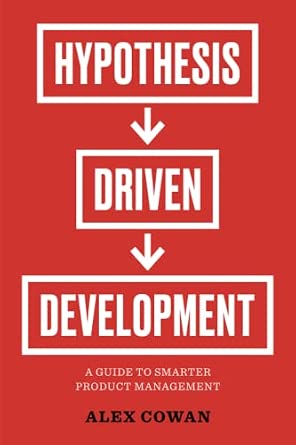
A practical framework for replacing confident opinions with explicit assumptions
that can actually be tested. I especially like its insistence that disciplined
experimentation is not the enemy of strategy—it is often how strategy becomes
intelligent.
One of the more approachable introductions to strategic thinking because it
treats decisions as interdependent: what makes sense depends partly on what
everyone else is likely to do. It is game theory made useful without requiring
the reader to become an economist first.
Organizations often behave as though decisions are driven entirely by facts,
when stories determine which facts people notice and what they believe those
facts mean. Shiller provides a valuable framework for understanding why ideas
spread, persist, and sometimes move markets long after their analytical
foundations become questionable.
Sutherland is especially good at exposing the limits of excessively rational
approaches to marketing and consumer behavior. I recommend it to anyone who
has ever watched an organization optimize away the very thing that made an
idea interesting.
Dated in places, indispensable in others. Ogilvy’s real value is his clarity
about craft, persuasion, clients, and the obligation to understand the person
on the receiving end of the advertisement.
A short, provocative challenge to the assumptions underlying digital advertising
and the machinery built around attention. It is especially useful for marketers
because it asks uncomfortable questions about an ecosystem our profession often
has strong financial incentives not to examine too closely.
A valuable reminder that persuasion is not simply a contest over who has the
better facts. Lakoff’s discussion of framing is useful well beyond politics for
anyone trying to understand how language, identity, and preexisting mental
models shape what audiences are willing to hear.
One of my favorite accounts of what happens when strategy, ego, governance,
celebrity, and corporate politics become inseparable. It is nominally a book
about Disney, but much of it will feel unnervingly familiar to anyone who has
spent enough time inside a large organization.
A fascinating study of dealmaking, relationships, ambition, and the accumulation
of corporate power. Ross’s career is a reminder that organizations are shaped
not only by strategy decks but by networks, loyalties, leverage, and personalities.
A terrific account of the AOL Time Warner merger and what happens when
incompatible corporate cultures are expected to merge simply because the
spreadsheet says they should. It is also a useful warning about confusing
technological enthusiasm with organizational readiness.
A case study in the costs of treating aggression as a substitute for management.
What makes the Uber story useful is not merely its excesses, but how readily
questionable behavior can become normalized when growth appears to justify
almost anything.
One of the books I would most like people to read before concluding that
organizational dysfunction is caused by a few unusually bad managers. Jackall
shows how incentives, hierarchy, ambiguity, and self-preservation can make
perfectly ordinary people behave in ways they might never choose independently.
Ehrenreich punctures the comfortable fiction that low-wage work is simple work.
The book is funny, angry, observant, and particularly good at showing how
organizations transfer costs and uncertainty downward to the people least able
to absorb them.
Essential reading for understanding emotional labor and the hidden work
involved in producing the experience organizations expect customers to
receive. Once you recognize emotional labor, it becomes difficult not to
see it everywhere in service organizations.
The brilliance of this book is how quickly an apparently familiar consumer
product becomes a lens on labor, supply chains, incentives, regulation, and
industrial scale. It is a useful reminder that the business model behind an
everyday experience is often far more consequential than the brand experience itself.
A compelling way to think about markets in which a small number of intermediaries
acquire disproportionate power over both creators and consumers. The broader lesson
is useful far outside media: when everyone must pass through the same gate, the
gatekeeper eventually notices.
What I like about Gergen is the opportunity to compare very different leaders
through the eyes of someone who worked closely with several of them. It reinforces
how much leadership depends on temperament, judgment, adaptability, and the ability
to understand the institution one is attempting to lead.
I find this most interesting as a study of ambition, adaptation, identity,
and the choices people make when personal relationships and public power become
inseparable. Whatever one thinks of Hillary Clinton politically, Sheehy offers
rich material for thinking about resilience and the costs of remaining inside
extraordinarily demanding institutions.
A particularly interesting political biography because it treats presidential
leadership through the lens of personality and narrative identity rather than
simply recounting events. It is a useful demonstration of how the stories leaders
tell about themselves can eventually shape the decisions they make for everyone else.
Lorne Michaels is a fascinating leadership subject precisely because his influence
has lasted for decades inside an industry famous for volatility and enormous
personalities. I am interested in the book less as a history of
Saturday Night Live than as a study of talent management,
institutional endurance, gatekeeping, and the unusually subtle forms power can take.
Leadership literature often focuses so intensely on the person at the top that
it treats everyone around that person as supporting cast. Keil and Zangrillo
offer the more useful premise that leaders are constrained—and frequently
defined—by the executive teams they assemble and the operating dynamics they permit.
I recommend books here because I found them useful, provocative, unusually insightful,
or worth arguing with. Inclusion does not mean I agree with every argument in a book,
and this is not intended as a comprehensive reading list. I update the collection as
I encounter work that changes or sharpens how I think.
Book cover images are provided through Open Library, Google Books,
publisher resources, and other authorized product-image sources.